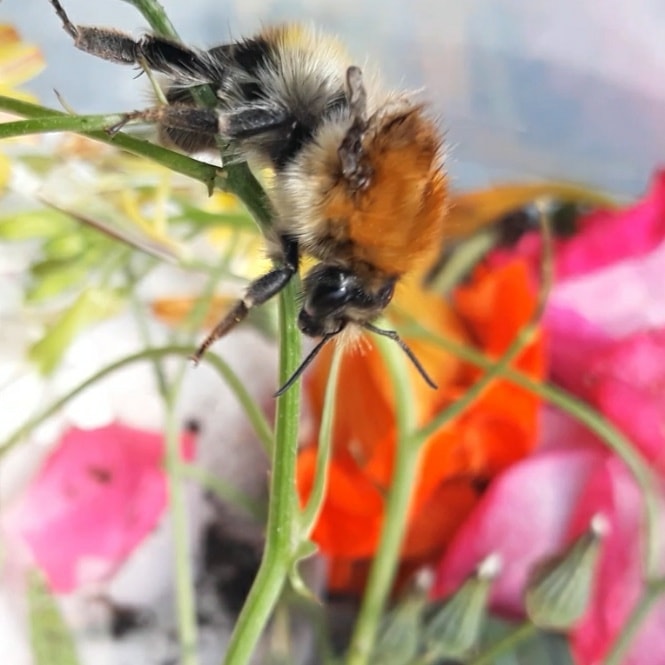
Pour les personnes intéressées par les bons gestes à adopter lorsqu’un bourdon est en détresse, nous vous invitions de lire le mail de l’association Bumblebee Conservation Trust, situé en Grande Bretagne, que nous avions contacté pour un petit bourdon amputé des ailes.
Nous les remercions vivement d’avoir répondu à notre demande.
“Dear Charlotte, Thank you for your email. Your English is great! This looks like a Common carder bumblebee (Bombus pascuorum).
It is sad to see bumblebees with such deformed wings. There are a number of reasons that bumblebees can have deformed wings like this, including viruses but also physical problems emerging from their cocoons or with pupation, or even getting attacked by birds or hurt in bad weather. It’s not possible to give a diagnosis from the appearance, although if it was a virus such as DWV then there is potential that it could be spread if these bees come into contact with others (e.g. on flowers). However, if they are not able to fly, then they won’t carry out normal bumblebee behaviours like visiting flowers, or contribute to a nest.
We never recommend bringing unwell bumblebees inside – they need to be outdoors. The best thing to do would be to pop this bee on a nearby flower, if you feel comfortable picking it up. Somewhere sheltered but with a large flower to sit on would be best. This way, it will be able to get all the nutrients it needs in its natural environment. In due course, it will probably become part of the food chain and provide vital energy for a great tit or robin feeding its own young.
I’m sorry that I don’t have better news! Best wishes, Annie Ives Information Officer
Bumblebee Conservation Trust Charity Number 1115634 (England & Wales) SC042830 (Scotland)
www.bumblebeeconservation.org "
Pour les personnes souhaitant savoir ce qu’il est devenu : en attendant une réponse par le Bumblebee Conservation Trust, le bourdon avait été placé dans un grand bac rempli de fleurs et d’eau sucrée les 2 premiers jours pour reprendre des forces. Puis il a emménagé dans un grand bac à fleurs en exterieur qu’il semblait savourer à l’abri des prédateurs. Même sans ailes, l’instinct de vagabonder étaient plus fort que lui et c’est ainsi qu’il a repris la route, comme préconisée par l’association.
C’est incroyable que l’on puisse s’attacher si rapidement à un si petit être en 4 jours seulement. Mais aucun regret, c’est la nature et il faut la respecter